
Ohio Family Court Records
Ohio family court records cover a wide range of case types filed through the Court of Common Pleas in each of the state's 88 counties. These records include divorce and dissolution filings, child custody orders, support cases, protection orders, and probate matters like guardianship and adoption. You can search for many of these records online or go to the local courthouse in person. The Clerk of Courts in each county keeps the official files. If you need a copy of a case document or want to look up a family court case, the county where the case was filed is where you start.
Ohio Family Court Records Overview
Where to Find Ohio Family Court Records
Family court records in Ohio are kept at the county level. The Court of Common Pleas is the main trial court in each county, and it has divisions that deal with different types of family cases. The Domestic Relations Division handles divorce, dissolution, legal separation, and annulment filings. It also takes care of child custody, parenting time, child support, and spousal support. The Probate Court deals with estates, guardianships, adoptions, marriage licenses, and name changes. The Juvenile Division covers cases that involve minors, such as abuse, neglect, dependency, and delinquency. Each of these divisions keeps its own set of records.
The Supreme Court of Ohio oversees the entire state court system and sets rules that all 88 county courts must follow. That includes standardized forms for domestic relations and juvenile cases. You can find these forms on the Supreme Court website, though you file them at your local county court. The Clerk of Courts in each county is the official record keeper for the Court of Common Pleas, including the Domestic Relations Division. In many counties, the Probate Judge also serves as the clerk of that court.
The screenshot below shows the Supreme Court of Ohio main portal, which links to court forms, case information, and resources across the state.
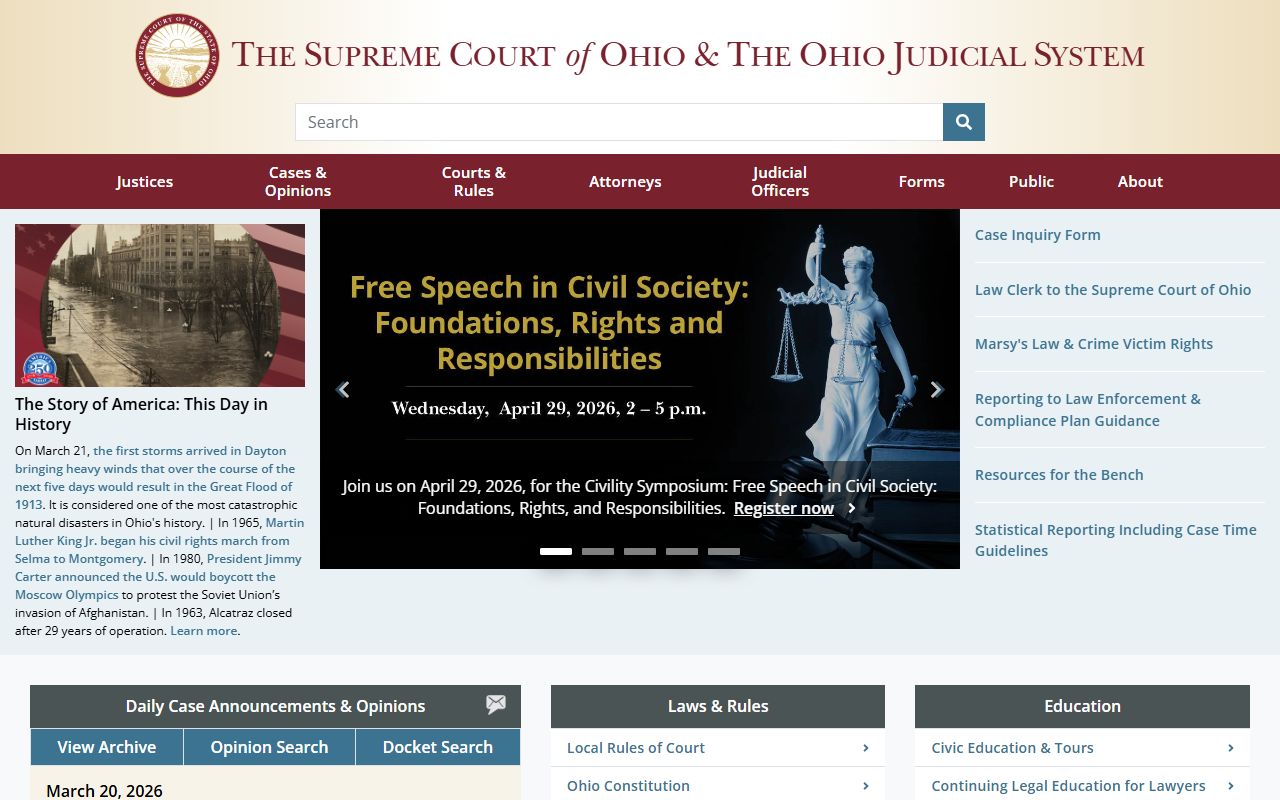
This site gives you access to standardized court forms and a court finder tool that can help you locate the right county court for your case.
Ohio also has a unique process for public records disputes. If a court or public office refuses to give you records you think you are entitled to, you can file a complaint with the Ohio Court of Claims. The filing fee is $25. Cases go through mandatory mediation first. The Court of Claims sits at 65 South Front Street in Columbus.
Here is a look at the Ohio Court of Claims website, which handles public records complaints.
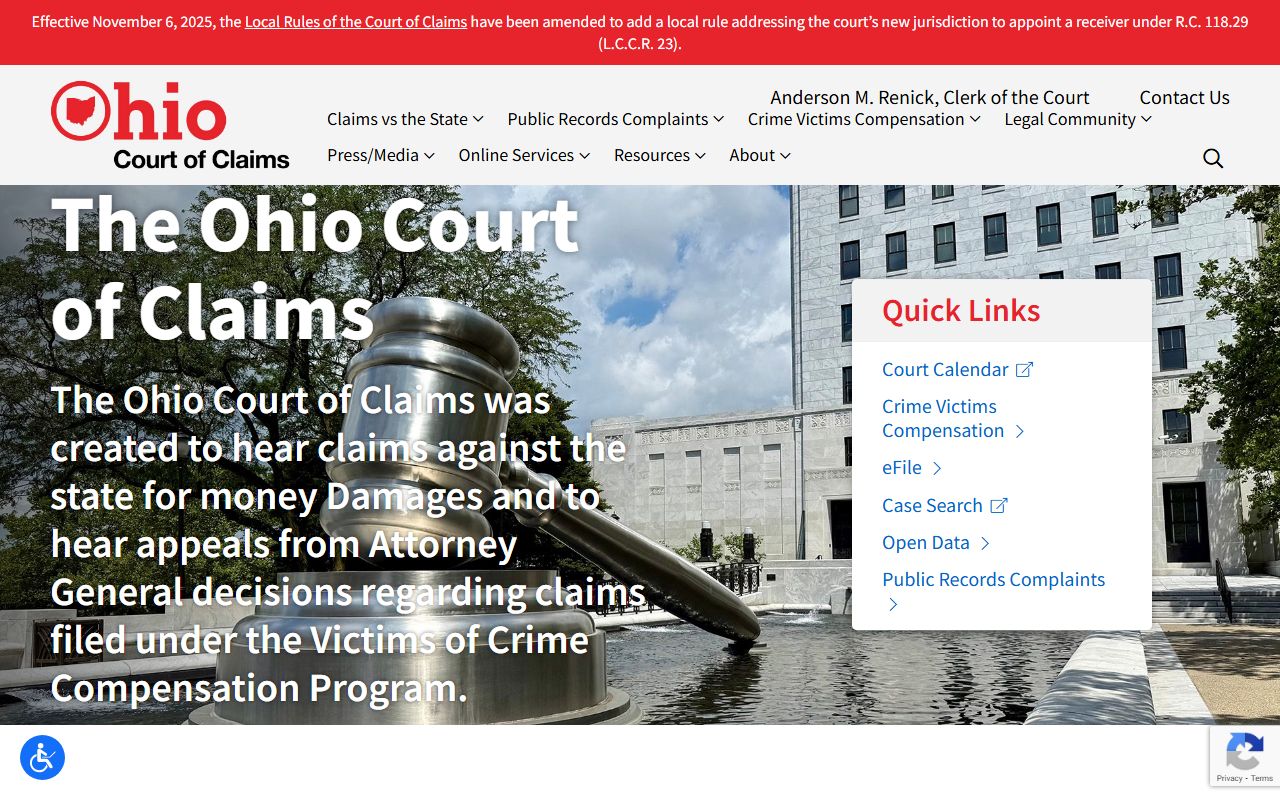
You must give the public office three business days to fix the issue before you file a complaint with the Court of Claims.
How to Search Court Cases in Ohio
There are a few ways to search for family court records in Ohio. Online access is the fastest for basic case details. In-person visits to the courthouse let you see the full case file and get certified copies. Some counties also take requests by mail or phone. The method you pick depends on what you need and how much detail you want.
Many Ohio counties offer online case search tools through their Clerk of Courts websites. Some use the CourtView system that lets you search by name, case number, or date range. The types of cases you can find online include civil, criminal, and domestic relations filings. Not all documents in a case show up online, but you can often see party names, case status, hearing dates, and docket entries. The level of online access varies by county. Some counties have put their full dockets online while others only show basic case index data.
The Ohio Public Records Act (ORC 149.43) gives any person the right to ask for public records held by a government office. You do not have to give your name or say why you want the records. The office must provide them at cost within a reasonable time. The screenshot below shows this statute on the Ohio Revised Code website.
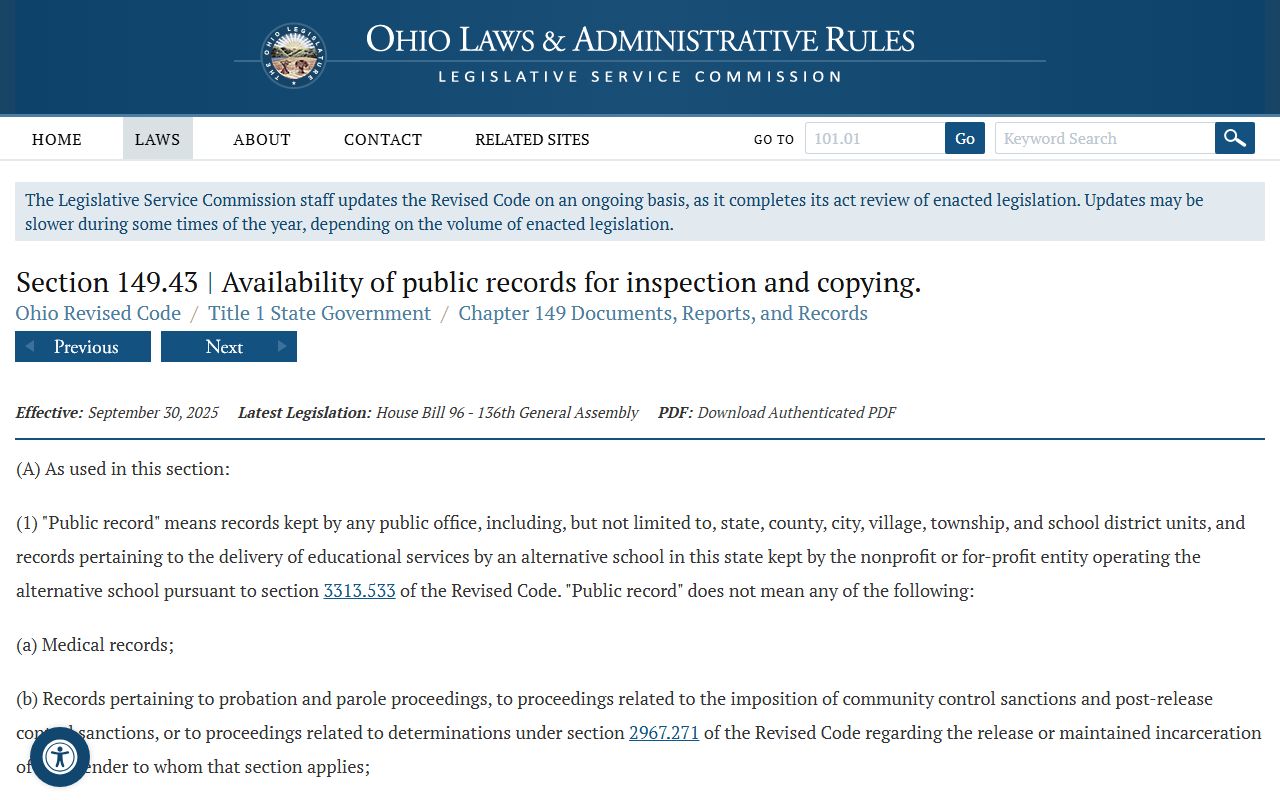
This law is the backbone of records access in Ohio. It applies to all public offices including county courts.
Note: A written request is not required for public records in Ohio, but putting your request in writing can help avoid confusion about what you need.
Types of Family Court Records in Ohio
Ohio family court records span several divisions of the Court of Common Pleas. The Domestic Relations Division is where divorce and dissolution cases are filed. Ohio recognizes both fault-based divorce and no-fault dissolution of marriage. A divorce case can be based on any of 11 grounds listed in ORC Chapter 3105, including incompatibility, living apart for one year, extreme cruelty, and adultery. A dissolution is a mutual agreement where both spouses file together. The court also handles legal separation and annulment cases in this division.
The Supreme Court of Ohio provides standardized domestic relations forms that all 88 counties must accept. These include affidavits for income and property, complaints for divorce with and without children, shared parenting plans, and judgment entries. The forms were first adopted in 2010 under Ohio Rule of Civil Procedure 84 and last updated in June 2021.
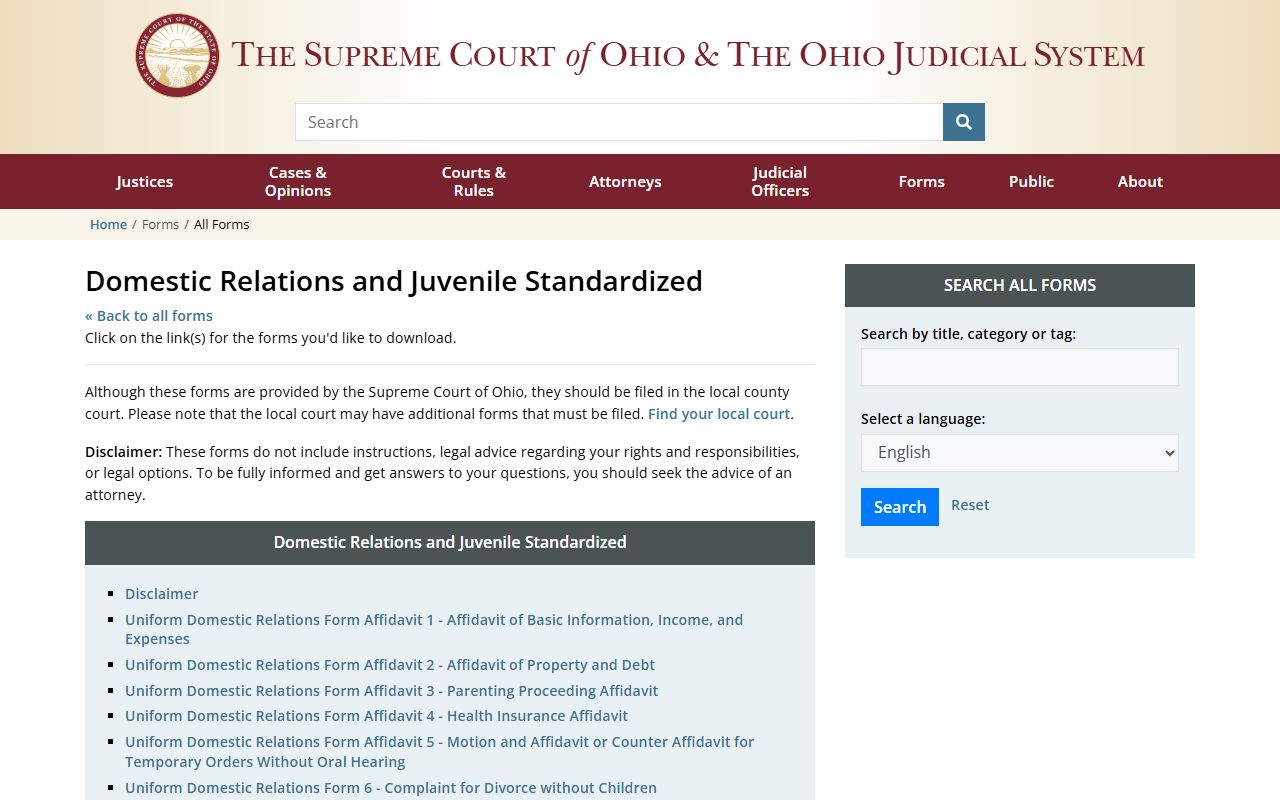
Local courts may need extra forms on top of these, but they cannot refuse the standardized ones.
Probate Court records make up a large part of Ohio family court records as well. The Supreme Court of Ohio probate forms page lists dozens of form categories. These cover adoptions, guardianships for adults and minors, name changes, estates, protective services, and wrongful death cases. Marriage licenses are also issued by the Probate Court in each county.
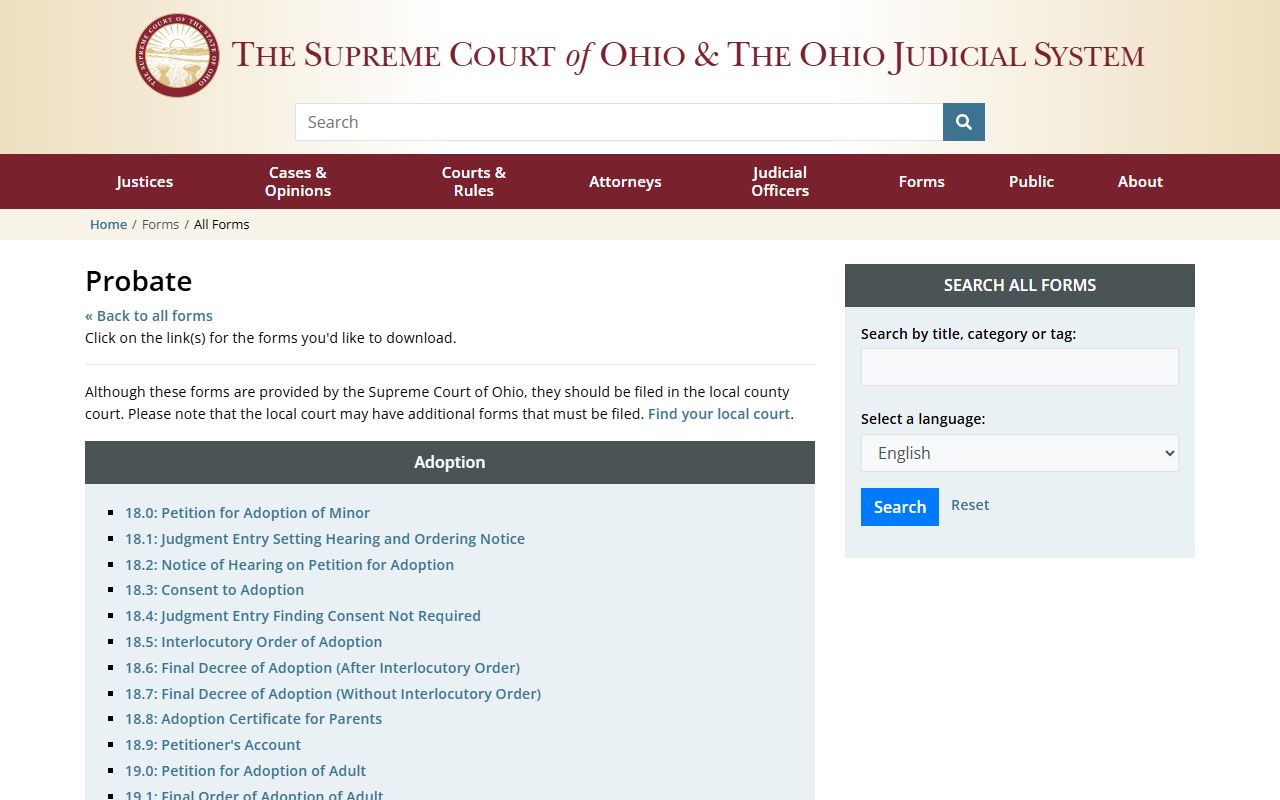
Probate courts must make their general docket available online under ORC 2101.11. This includes individual documents in each case file, with some exceptions for internal records and restricted items.
Ohio Divorce and Custody Laws
Ohio law gives the Court of Common Pleas full equitable powers over all domestic relations matters. Under ORC 3105.011, the court can divide property, set support, and allocate parental rights. The plaintiff in a divorce must have been an Ohio resident for at least six months before filing. You file in the county where either spouse lives.
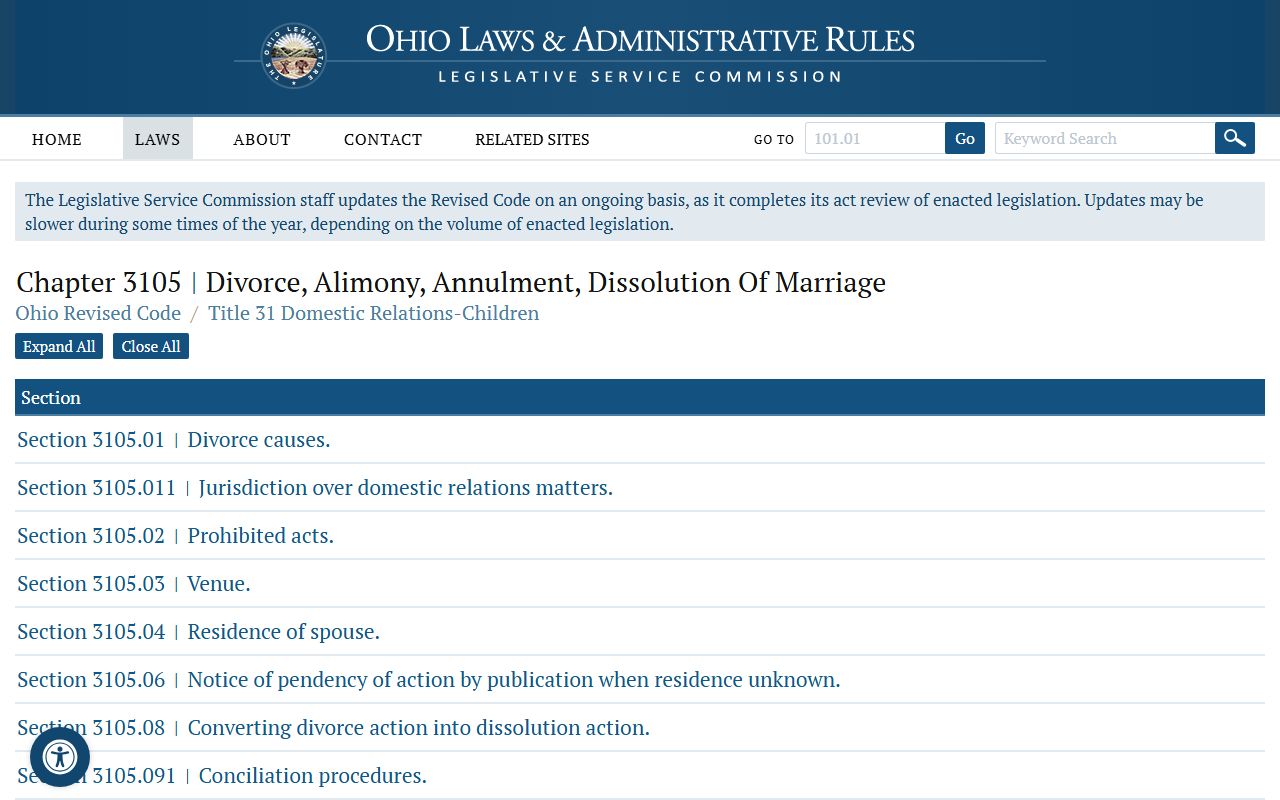
Ohio has 11 grounds for divorce under ORC 3105.01. These include bigamy, willful absence for one year, adultery, extreme cruelty, fraud, gross neglect of duty, habitual drunkenness, imprisonment, foreign divorce, living apart for one year, and incompatibility. The incompatibility ground works like a no-fault option. If one spouse raises it and the other does not deny it, the court grants the divorce on that basis. Ohio also offers dissolution, which is a mutual agreement where both spouses file a joint petition.
Here is a look at ORC Chapter 3105 on the Ohio Revised Code website. It covers divorce causes, jurisdiction, property division, and spousal support.
Property division in Ohio follows equitable distribution rules. Marital property is split fairly but not always equally.
Child custody in Ohio is governed by ORC Chapter 3109. The court uses a best interest standard when deciding custody. Ohio law calls it "allocation of parental rights and responsibilities." Both parents stand on equal footing. The court looks at the child's wishes, each parent's relationship with the child, adjustment to home and school, and any history of abuse. Shared parenting plans are common. Ohio uses the term "residential parent" instead of "custodial parent" in many cases.
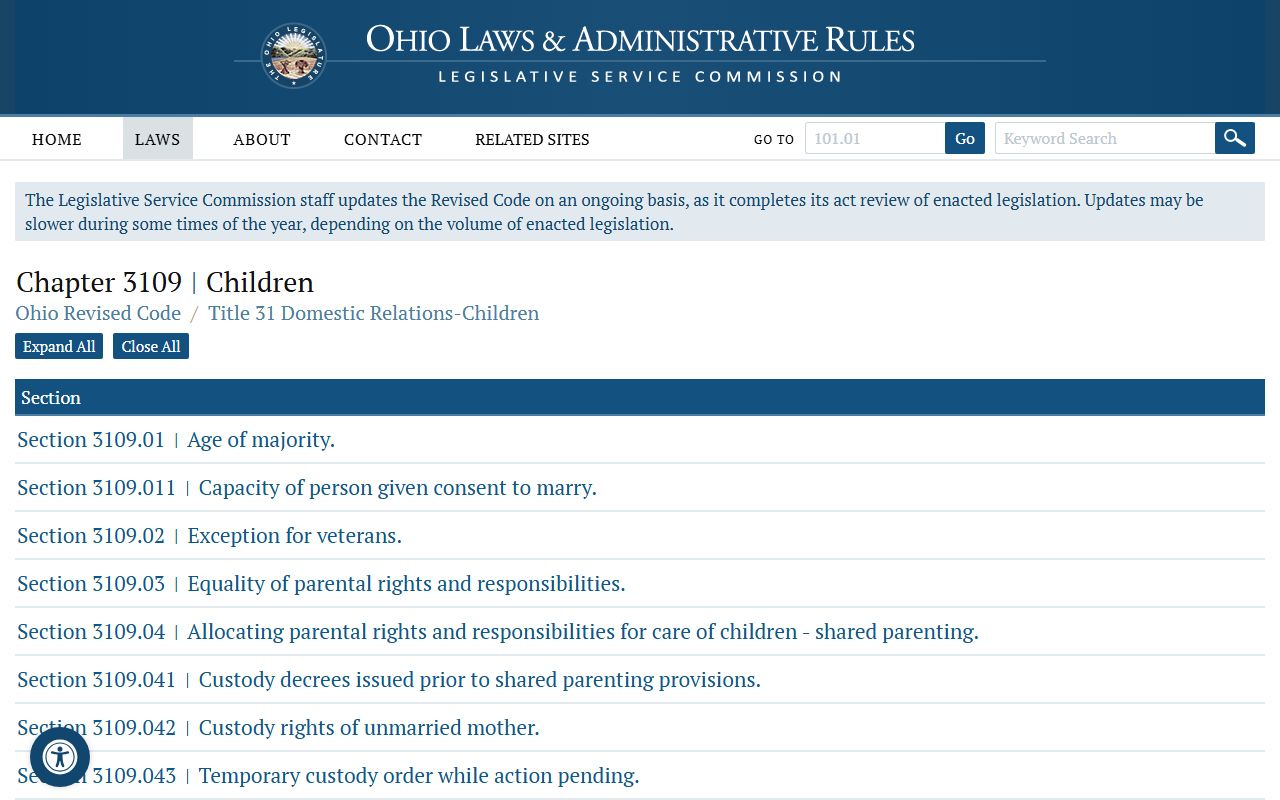
An unmarried mother is the sole residential parent by default until a court says otherwise under ORC 3109.042.
Juvenile court cases fall under ORC Chapter 2151. The Juvenile Division handles abuse, neglect, dependency, and delinquency. Ohio extends juvenile court jurisdiction for unruly child cases until age 21, which is unusual compared to most states. Juvenile records are generally confidential under ORC 2151.14 and not open to the public without a court order.
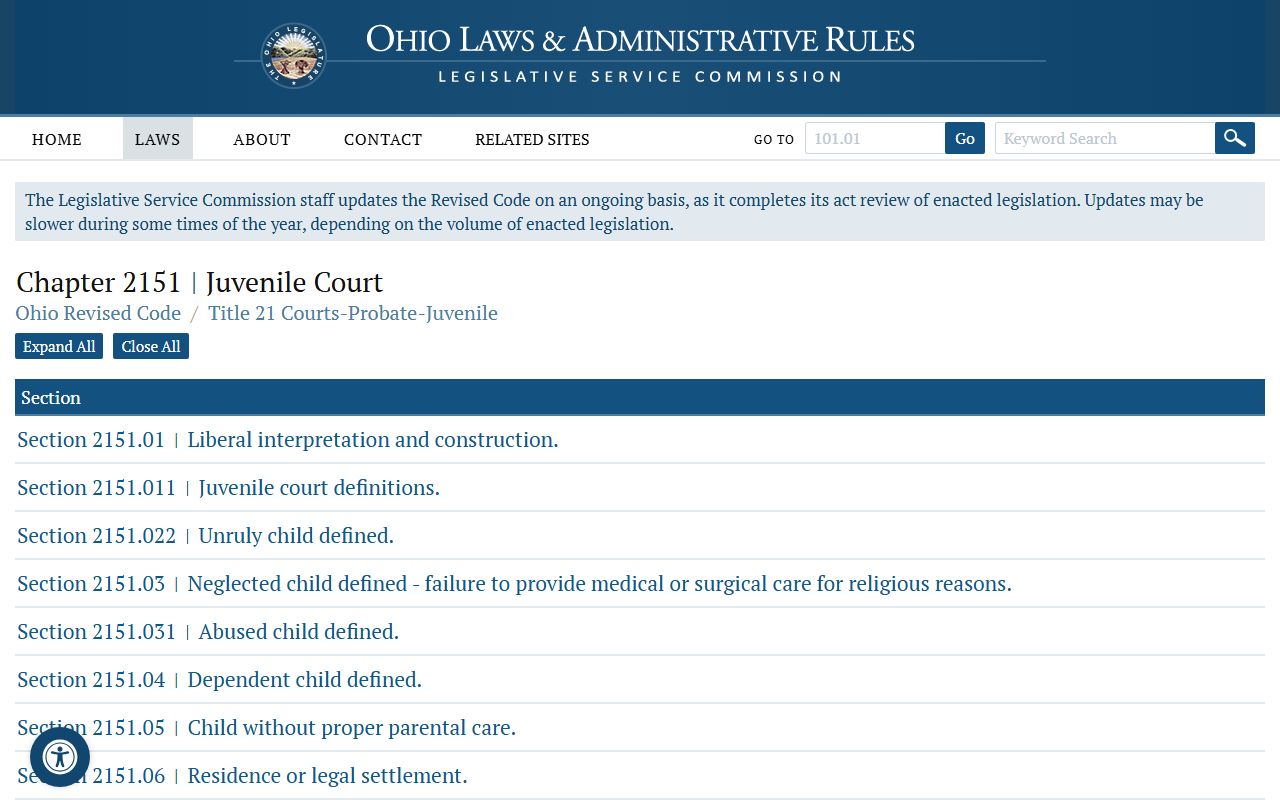
Certain agencies like boards of education and children services can access juvenile records with a court order under specific conditions.
Getting Copies of Ohio Family Court Records
To get copies of family court records in Ohio, contact the Clerk of Courts in the county where the case was filed. You can visit in person during business hours. Most offices are open Monday through Friday from 8:00 AM to 4:00 or 4:30 PM. Bring your ID. Staff can look up cases by name or case number. Plain copies are usually $0.10 per page. Certified copies cost more and carry the court seal. You need certified copies for things like proving a divorce for a name change or showing custody arrangements.
Some counties accept requests by mail. Send a written request with the case details, the specific documents you need, and a check or money order for the copy fees. Include a self-addressed stamped envelope for the return. Wait times vary by county. In-person requests can often be filled the same day. Mail requests may take a week or more. The Probate Court records statute (ORC 2101) sets specific fee schedules for probate matters. Adoption petitions cost $20 to file. Certified copies from Probate Court are $1.00 per page with a $1.00 minimum. Marriage licenses cost about $50 in most counties.
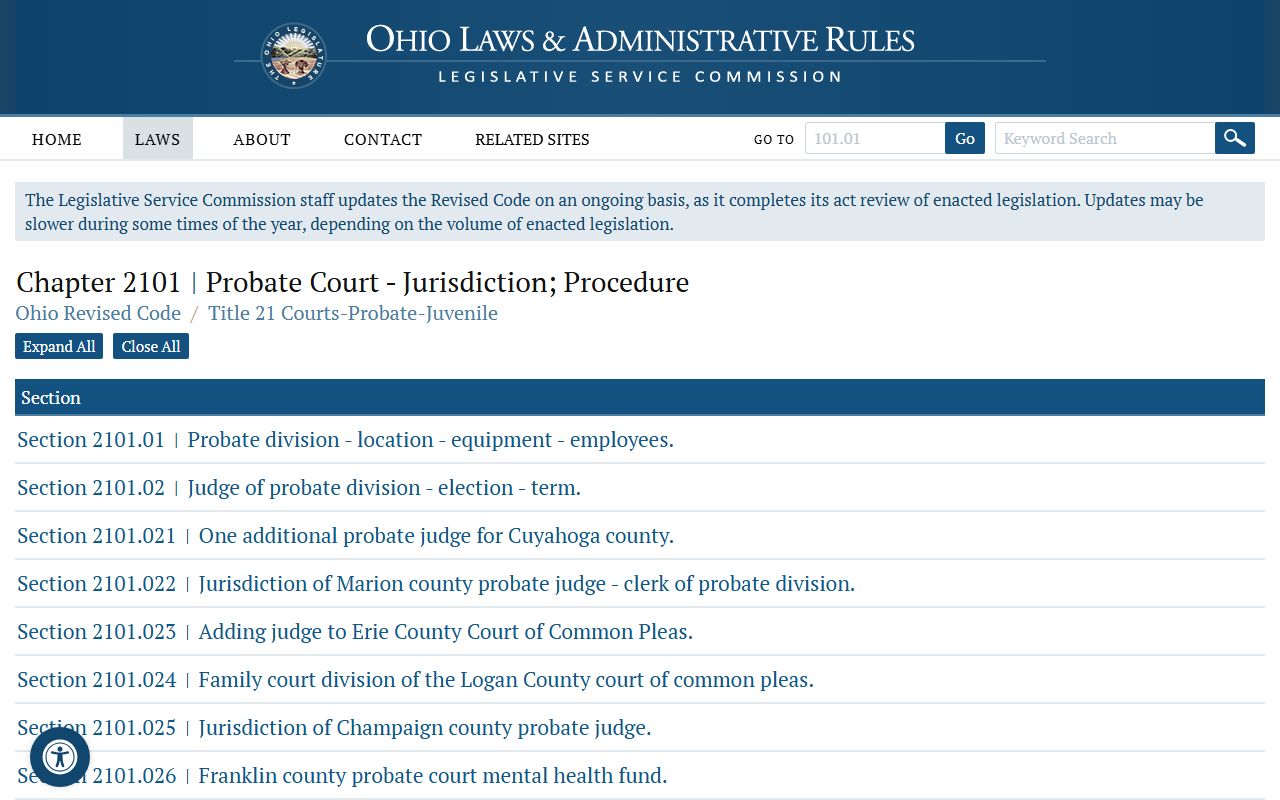
The probate fee schedule is set by state law but some counties add local surcharges on top of the base amounts.
Note: Ohio courts retain divorce and dissolution records for 25 years after the final order, so older records may have been archived or destroyed.
Legal Help for Ohio Families
Protection orders are a key part of Ohio family court records. The Supreme Court of Ohio provides protection order forms in multiple languages including English, Arabic, Chinese, French, Russian, and Spanish. These forms cover domestic violence civil protection orders, juvenile civil protection orders, and stalking protection orders. Courts issue these under ORC 3113.31 and related statutes.
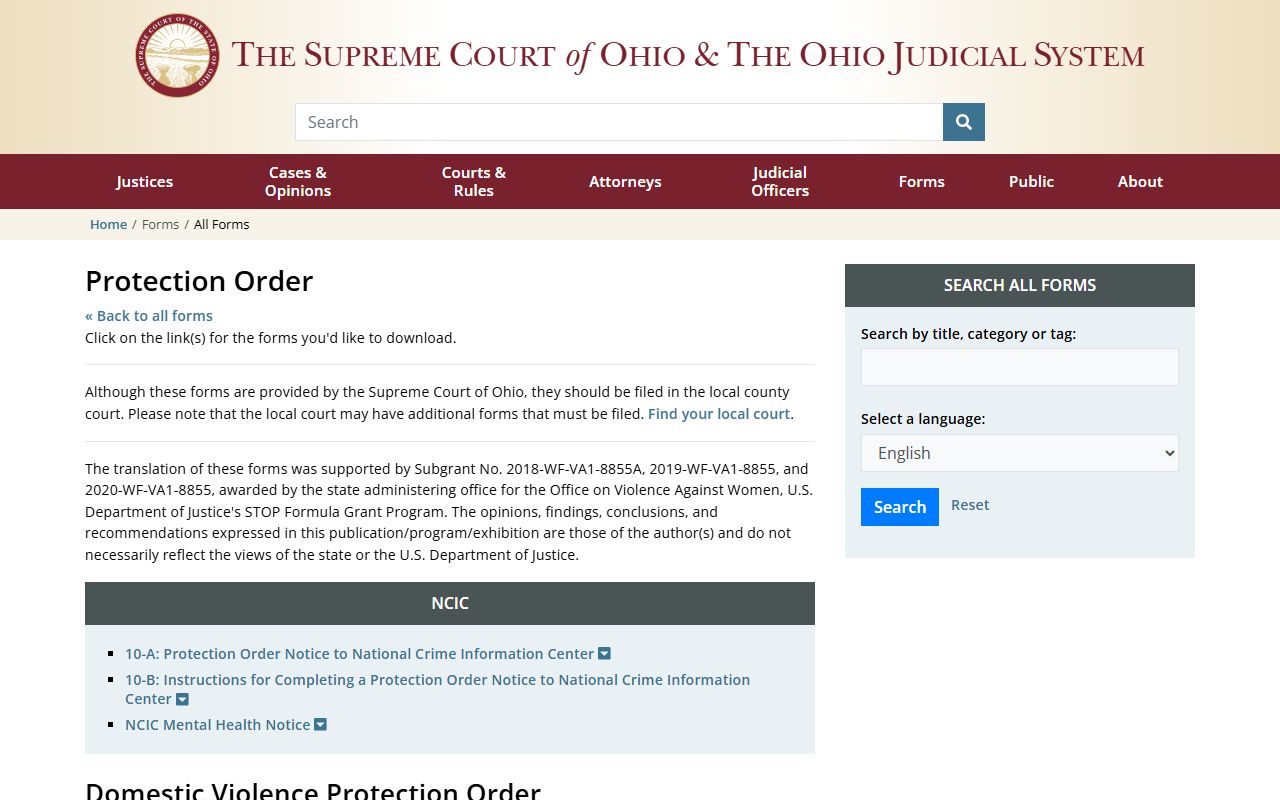
Firearm possession notices are part of the protection order process. Form 10.04-A covers this requirement.
Ohio has legal aid groups across the state that help with family law cases. Many offer free services based on income. If you need help with a divorce, custody dispute, or protection order, check with your county's legal aid office. The Ohio State Bar Association can refer you to a family law attorney in your area. Many courthouses also have self-help centers where staff can point you to the right forms and explain the filing process, though they cannot give legal advice.
The Toledo Municipal Court public records policy page shows an example of how Ohio courts handle records requests.
Each county court has its own records request procedures, but all must comply with the Ohio Public Records Act.
Are Family Court Records Public in Ohio
Most family court records in Ohio are public. The Ohio Public Records Act at ORC 149.43 defines public records broadly and gives anyone the right to inspect and copy them. You do not need to be a party to the case. Courts must provide records at cost within a reasonable time. If a record is partly exempt, the court must give you the non-exempt parts and tell you why the rest was withheld.
Some family court records have limits on access. Adoption records are confidential under Ohio law. Information in the putative father registry is also exempt from public disclosure. Juvenile court records are generally not open to the public under ORC 2151.14. Financial source documents like tax returns and pay stubs may be restricted. Courts can seal other records by order if there is good cause. Personal information like Social Security numbers gets redacted from public copies.
- Divorce and dissolution case files are generally public
- Adoption records are sealed and require a court order to access
- Juvenile records are confidential by default
- Protection order filings are public but victim addresses may be restricted
- Probate records including estates and guardianships are mostly public
- Marriage license records are public through the Probate Court
Browse Ohio Family Court Records by County
Each of Ohio's 88 counties has its own Court of Common Pleas with a Domestic Relations Division that handles family law cases. Pick a county below to find local court contact info and resources for family court records in that area.
Family Court Records in Major Ohio Cities
Residents of major cities file family court cases at the Court of Common Pleas in their county. Pick a city below to find out where to go for family court records in that area.